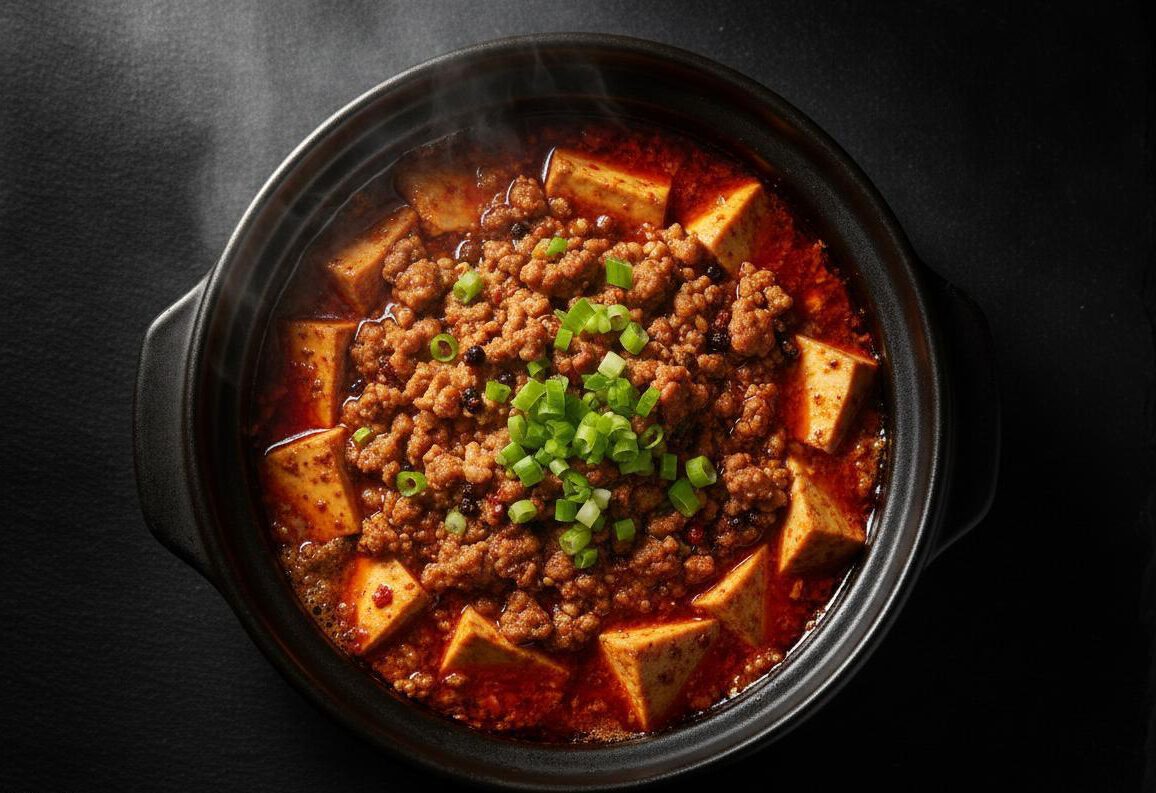
Authentic Mapo Tofu (麻婆豆腐)
In 1862, outside Chengdu, a woman named Chen — marked by smallpox scars — ran a riverside eatery. When boatmen asked for a cheap, hearty meal, she threw together soft tofu, minced beef, and her house-made chili bean paste. The result was a dish so electrifying it would travel from a Sichuan riverside to every Chinese restaurant on Earth.Mapo Tofu is governed by the "Eight Sensations" (八字诀): numbing, spicy, hot, fragrant, crispy, tender, fresh, and alive. Get all eight right, and you don't just cook tofu — you unlock a 160-year-old flavor code.
Ingredients
Method
- Blanch the tofu: Bring salted water to a gentle boil. Slide in tofu cubes and simmer for 2 minutes. This firms the surface while keeping the interior silky. Drain with a slotted spoon and set aside.
- Toast and grind the peppercorns: In a dry wok over medium-low heat, toast Sichuan peppercorns for 60–90 seconds until fragrant. Transfer to a mortar and grind into a coarse powder. Set aside — this is your "má" (numbing) weapon.
- Prep the mise en place: Mince beef, garlic, ginger, and scallion whites. Roughly chop douchi. Measure doubanjiang, chili flakes, and sauce liquids into small bowls.
- Fry the beef: Heat 2 tbsp oil in a wok over high heat until smoking. Add ground beef and stir-fry aggressively for 90 seconds until crispy and browned. The beef should look like tiny burnt-orange pebbles. Push to one side.
- Bloom the aromatics: Reduce heat to medium. Add doubanjiang and fry for 30 seconds until the oil turns deep red. Add garlic, ginger, scallion whites, and douchi. Stir-fry for 30 seconds until fragrant.
- Simmer the tofu: Pour in stock, soy sauce, Shaoxing wine, and sugar. Bring to a gentle boil. Slide in blanched tofu. Do not stir aggressively — push the wok back and forth to coat. Simmer for 3–4 minutes so the tofu absorbs the sauce.
- Thicken the sauce: Stir the cornstarch slurry, then drizzle it into the wok in 3 separate additions, pushing the wok gently between each. The sauce should turn glossy and cling to the tofu.
- The final "má" hit: Turn off the heat. Sprinkle half the ground Sichuan peppercorn over the top. Drizzle the remaining 1 tbsp oil around the edges for a final sizzle.
- Plate and serve: Transfer to a deep white bowl. Sprinkle remaining peppercorn and scallion greens on top. Serve immediately with steamed white rice.
Notes
• Do not use firm tofu — the silkiness of soft tofu is essential to the "tender" sensation.
• Pixian doubanjiang is the traditional choice; if unavailable, any good chili bean paste works.
• The beef must be fried until truly crispy ("sū"); undercooked beef will make the dish greasy.
• Add the cornstarch slurry in stages — one dump will create clumps.
• For a vegetarian version, substitute beef with finely minced shiitake mushrooms and add 1 tbsp more oil.